Why Does the Same Workout Feel Harder?
Physical Therapy

We all have days when we struggle through our workout. But what if it’s happening more and more often?
The routine you’ve been doing for months suddenly feels different. It’s harder to get through the session, and instead of feeling energized afterward, you’re drained. You finish feeling frustrated rather than accomplished. So why does the same workout feel harder some days?
An occasional off day is completely normal. But if workout fatigue is becoming frequent, it may be time to step back and reassess your routine and recovery habits. Small changes to your sleep, nutrition, and rest schedule can make a big difference in getting you back on track.
Yes, it is normal for effort to change
Let’s face it, some days you’re just not into your workout. But that’s to be expected as your energy levels fluctuate from day to day. Nothing to worry about if the next day you feel fine.
But if everyday you stumble through your reps or fail to go the full distance on your run, you may need to re-assess your routine as well as your lifestyle. Getting a handle on why the same workout is harder is the answer to making exercise fun again.
Why the same workout gets harder from day to day
You jump out of bed raring to get to the gym or the running track. Once there, though, your motivation wanes the minute you lift a weight or take the first step. There could be a number of reasons your workout is getting harder to finish.
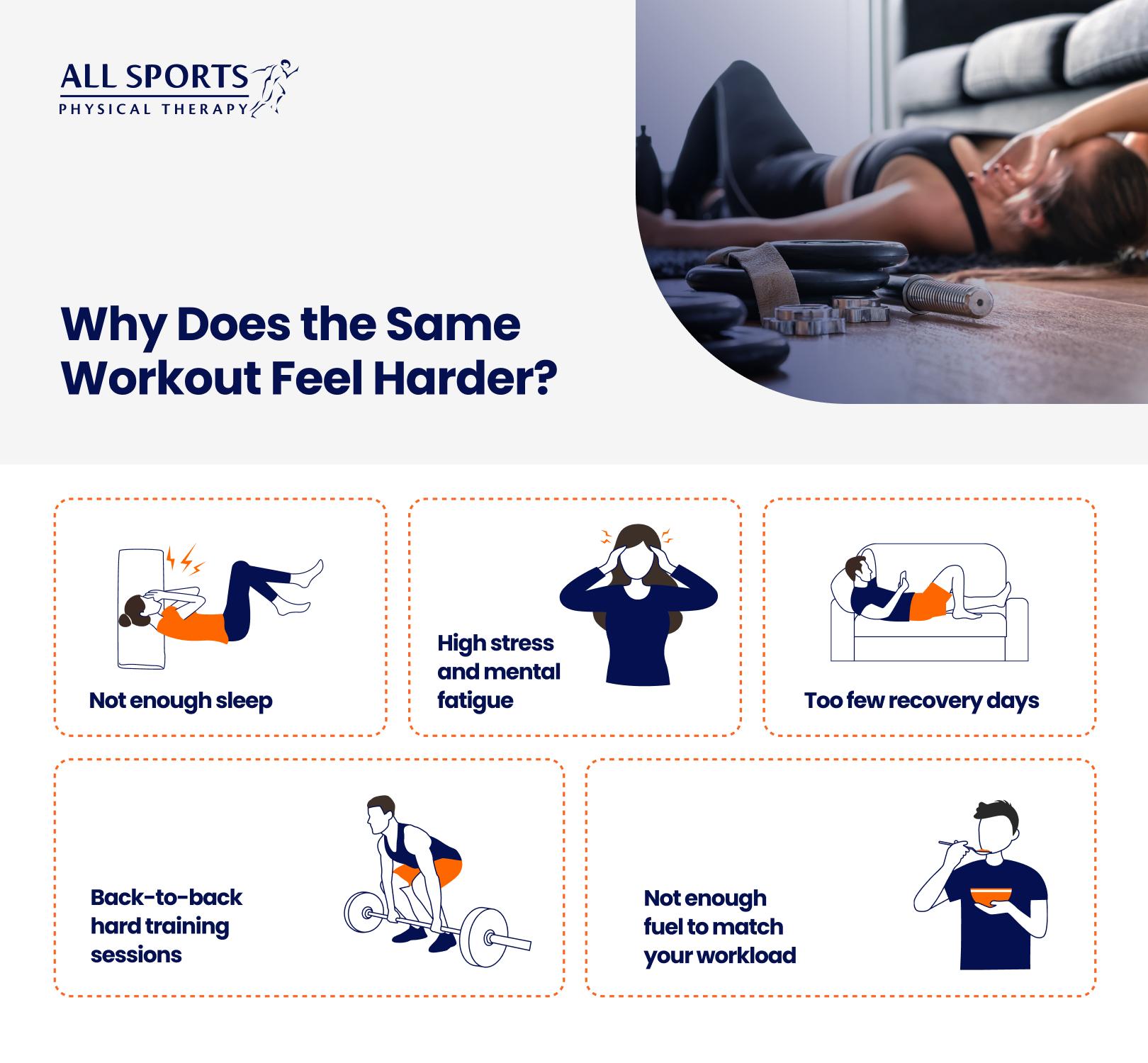
Not enough sleep. Sleep is a vital element of an effective workout, but often overlooked. As you sleep, your body sends out growth hormones to repair muscle fibers slightly torn during a strenuous workout. Seven to nine hours of slumber a night give your muscles the time they need to strengthen for the next workout.
Stress overload. Between work and family, your life is stressful enough. But guess what? Your body also perceives exercise as a form of stress. Intense exercise every day may be stressing out your body. Combat stress by lowering the intensity of your exercise sessions at least 1 to 2 times a week.
Not taking a break. It can take up to 24 hours for your body to fully recover from vigorous exercise. Plunging into an intense workout session the next day without adequate rest can leave you feeling fatigued and result in poor performance. So take a break. That doesn’t mean sitting on the couch. Simply dial down your workout to light cardio or yoga.
Poor nutrition. Exercise is a great way to manage weight. But your body also needs nutrients to fuel your workout. Your body stores energy to later use when exercising. Three to four hours before working out, eat a well-balanced meal of:
- Complex carbs (oatmeal, quinoa, or sweet potatoes)
- Colorful veggies (bell peppers, carrots, or tomatoes)
- Lean protein (chicken, plain yogurt, or eggs)
Fuel up before the workout. Before your workout, consume a snack of protein and complex (or good) carbohydrates, such as a piece of fruit, whole wheat bread, or a granola bar. These foods maintain a steady level of glucose during your workout to support your energy.
Dehydration. Not replacing the fluid lost during your workout can not only lead to muscle cramps, but a drop in performance, too. Your heart works harder to deliver blood and oxygen to your muscles, and that can be a drag on your workout. Drink 17 to 20 ounces of fluid a couple of hours before your workout, and 7 to 10 ounces every 10 to 20 minutes during the session.
When harder workouts are a warning sign
A few off-days is normal when you work out regularly. But if your workouts are getting progressively harder and more challenging every day, you may be slipping into what is known as overtraining syndrome.
Exercise is good for the body, but working too strenuously every day can harm your physical and mental well-being. Often affecting athletes, signs of overtraining syndrome can be seen in anyone who never misses a workout.
- Muscle pain and weakness
- Frequent colds due to a weakened immune system
- Irregular sleep patterns
- Depression and anxiety
- Mood changes
- Constant fatigue
- Overuse injuries (stress fractures, shin splints)
- Poor athletic performance
How physical therapy can help you train more consistently
Don’t let a few bad days throw you off your workout routine. A physical therapist can investigate what’s behind the lag in your energy levels making your workout feel harder.
Correcting your technique. A physical therapist can study your movements to see if your form is off. Failure to follow proper technique when lifting or running can lead to muscle imbalances that lead to pain and a possible injury to a joint.
Improving your performance. A physical therapist can show you ways to fix any deficiencies in your flexibility, mobility, strength, and skills to enhance your performance.
Building a personalized workout plan. The problem may not be you, but your workout regimen. You may need to mix strength training with cardio and flexibility exercises. A physical therapist can develop a personalized exercise program making sure you’re reaching your goals while also scheduling adequate rest periods.
Teaching you to listen to your body. Knowing when to stop and rest is an important part of maximizing your workout. Burnout occurs when pushing yourself too hard for too long. A physical therapist recognizes the signs you’re overdoing it—and when to take a break without setting back your progress
Get the most from your workout
A workout should leave you refreshed and feeling a sense of accomplishment. But that won’t happen if the same workout gets harder and harder each day. The physical therapy team at All Sports Physical Therapy can help you overcome workout fatigue. We’re trained in movement analysis and other factors possibly hindering your workout. We take a holistic approach to treating our patients. Contact us today to learn how to get the most out of your workout.
FAQs
Why does the same workout feel harder some days?
It could be due to a number of factors. Everything from your nutrition and sleep patterns to stress can make the same workout harder to get through on some days. Or it could be you’re just having an off day. Consistently feeling tired after your workout can be a red flag something deeper is going on.
Why is the same workout getting harder over time, even if I am training consistently?
The issue could be training overload. Intense exercise everyday without adequate rest may make the same workout more challenging. Building in rest days during your training schedule could be the answer.
Can stress, sleep, hydration, or inadequate fueling make the same workout feel harder?
Yes, all three can contribute to making your workout feel harder. Slacking on sleep, dehydration, and inadequate nutrition to fuel your energy can put a damper on your workout.
How can I tell the difference between normal fatigue and overtraining when the same workout feels harder?
Overtraining can be a serious problem. It goes beyond normal fatigue to mood changes, insomnia, pain, and overuse injuries. A physical therapist can determine if you’re falling into overtraining syndrome.
Should I see a physical therapist if I'm chronically fatigued during my workouts?
Definitely. A physical therapist can assess what is causing your tiredness and show you steps to energize your workout. It could be your diet, poor sleep habits, or not taking breaks between sessions. A physical therapist is trained to take a holistic approach when addressing exercise fatigue and other issues.